A friendly first response starts the reported route; the later scene is the observable check. These customer routes are reported by All Things How. Happy and Secret are community labels here, not a verified count or guaranteed main-ending recipe.
Who is Hashimoto?
Official developer notes introduce Hashimoto as the shop's landlord, a man in his late fifties or early sixties who dislikes noisy Akiba but remains closely tied to the district and its rent. His guarded personality and memories of an older Akihabara make the history of his device important to the shop's larger story.
The Pokia repair choice
When Hashimoto brings in the Nokia-inspired Pokia, offer to do the work for free. He still pays, but the offer changes the tone of the exchange and opens the opportunity to ask about the phone's history. Charging the interaction like an ordinary ticket can close the better branch.
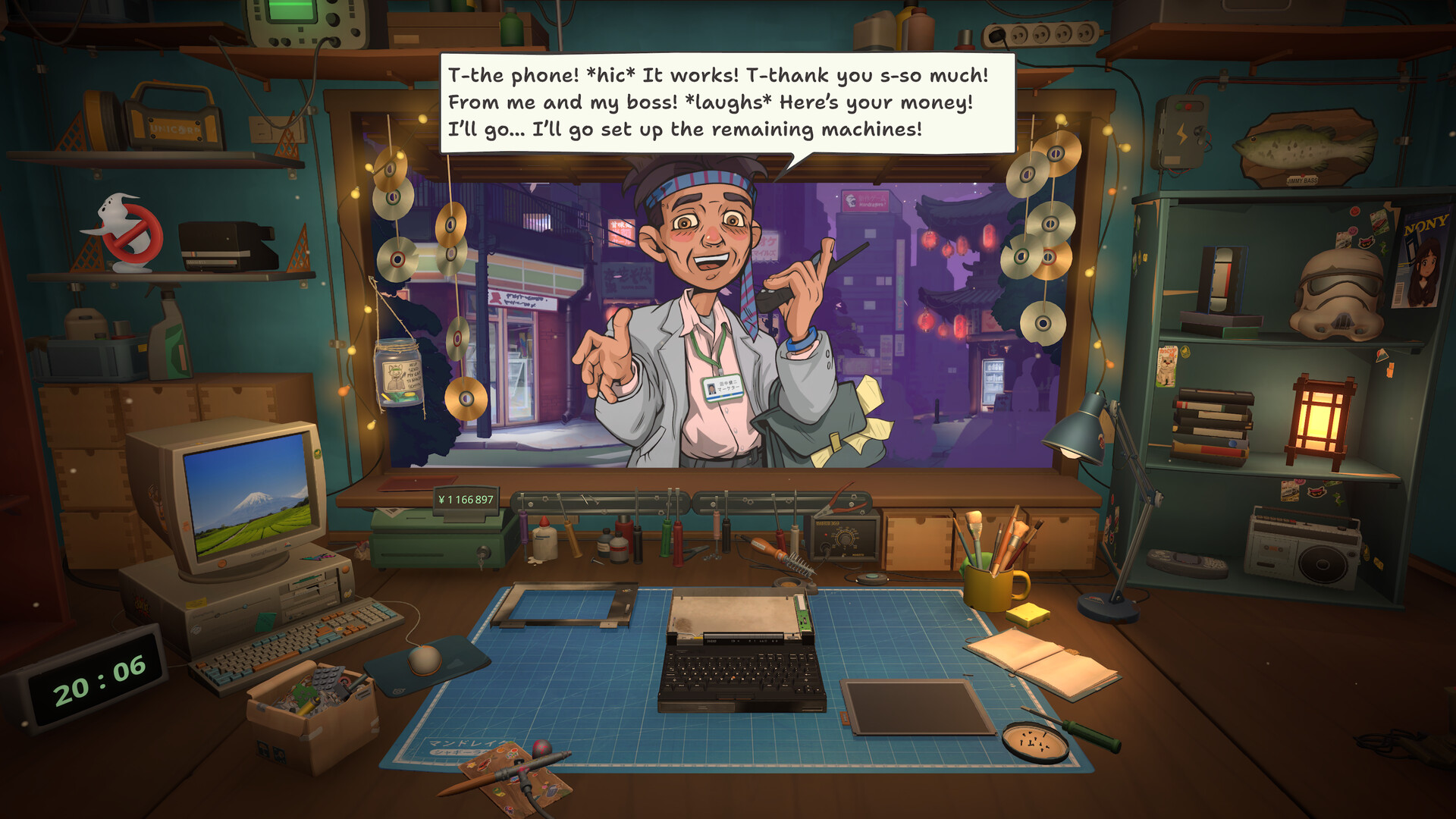
A completed repair can unlock the next dialogue, achievement, or story beat. Save before mutually exclusive choices when the route matters.
Positive route steps
Read every line before returning the phone, make the free-work offer, and select the history question when it becomes available. Continue speaking with Hashimoto on later visits instead of assuming the repaired device ends his story. Keep a save immediately before the hand-in because the important decision is attached to the customer conversation.
Customer follow-ups are not a main-ending formula
Save before returning Hashimoto’s Pokia, offer free repair and ask its history. Continue the later conversations until the drawer callback.
Spoiler-light checklist
If you want the positive relationship without reading the final revelation, follow this short route and stop once the drawer event begins.
- Save before returning Hashimoto's Pokia
- Offer to work for free
- Ask about the device's history
- Continue every later Hashimoto conversation
- Confirm the drawer event before the final story sequence
Hashimoto route troubleshooting
If the drawer scene does not appear, return to the earliest clean checkpoint before the Pokia hand-in. Confirm that the free-work offer was selected and that the optional history question was not skipped. Then continue later landlord conversations instead of advancing only through unrelated orders. Do not assume that paying rent, decorating the shop, or reaching a money target substitutes for the personal route. When comparing two saves, keep business activity similar and change only the hand-in responses. That isolates the decision and avoids crediting a nearby purchase or day transition for a story event it did not cause.
Hashimoto's role beyond the ending
His story also anchors the site's history. Official notes portray him as controlling, practical, attached to rent, and privately nostalgic about an Akihabara that has changed around him. The Pokia is therefore not just another customer device: asking where it came from turns a repair into a conversation about memory and ownership. The later drawer extends the same theme into the previous shop owner. This context explains why the generous repair and history question matter, while still leaving the actual Secret Ending scene for the player to discover.
Hashimoto decision map and save checkpoints
Treat the Pokia hand-in as the first controlled checkpoint and the later drawer event as the confirmation checkpoint. The route is easier to verify when the save names describe the decision rather than the day number. Keep one save before returning the phone and another after the history question, then continue the landlord conversations without overwriting both. If the event does not appear, compare the two branches instead of replaying unrelated shop work.
| Checkpoint | Required choice or observation | Why keep it |
|---|---|---|
| Before Pokia hand-in | Repair complete; conversation not started | Lets you retest the offer and question |
| During hand-in | Offer free work and ask about the history | Records the two route decisions |
| Later visits | Finish each available Hashimoto conversation | Prevents an unread follow-up from looking like a broken route |
| Drawer event | Event begins before the final sequence | Confirms the extended arc registered |
What the route evidence does and does not show
The free-repair offer, history question and drawer event belong to the documented positive route. They do not prove that rent payments, shop rating, a specific cash balance or a fixed calendar day causes the scene. When reporting a mismatch, include the build, the exact hand-in choices, the last Hashimoto conversation seen and whether the final story sequence has started. Keep speculation about hidden money or decoration requirements out of the report unless a controlled comparison demonstrates it. For a spoiler-light record, name saves by checkpoint—before hand-in, after history question, after last landlord visit—instead of writing the outcome into the filename. That keeps the evidence usable while letting another player follow the route without revealing the drawer scene in advance. Preserve the earliest checkpoint until the route is confirmed; later autosaves may no longer expose the hand-in choice.