A friendly first response starts the reported route; the later scene is the observable check. These customer routes are reported by All Things How. Happy and Secret are community labels here, not a verified count or guaranteed main-ending recipe.
The decision point
Save before returning the Pokia, offer free repair and take the history question. Keep talking to Hashimoto and watch for the drawer callback.
Ask about the device history
Take the history dialogue when it appears. This is not filler: it connects Hashimoto's personal past, changing Akihabara, and the shop. Skipping the question can leave the repair complete while the character arc remains shallow.
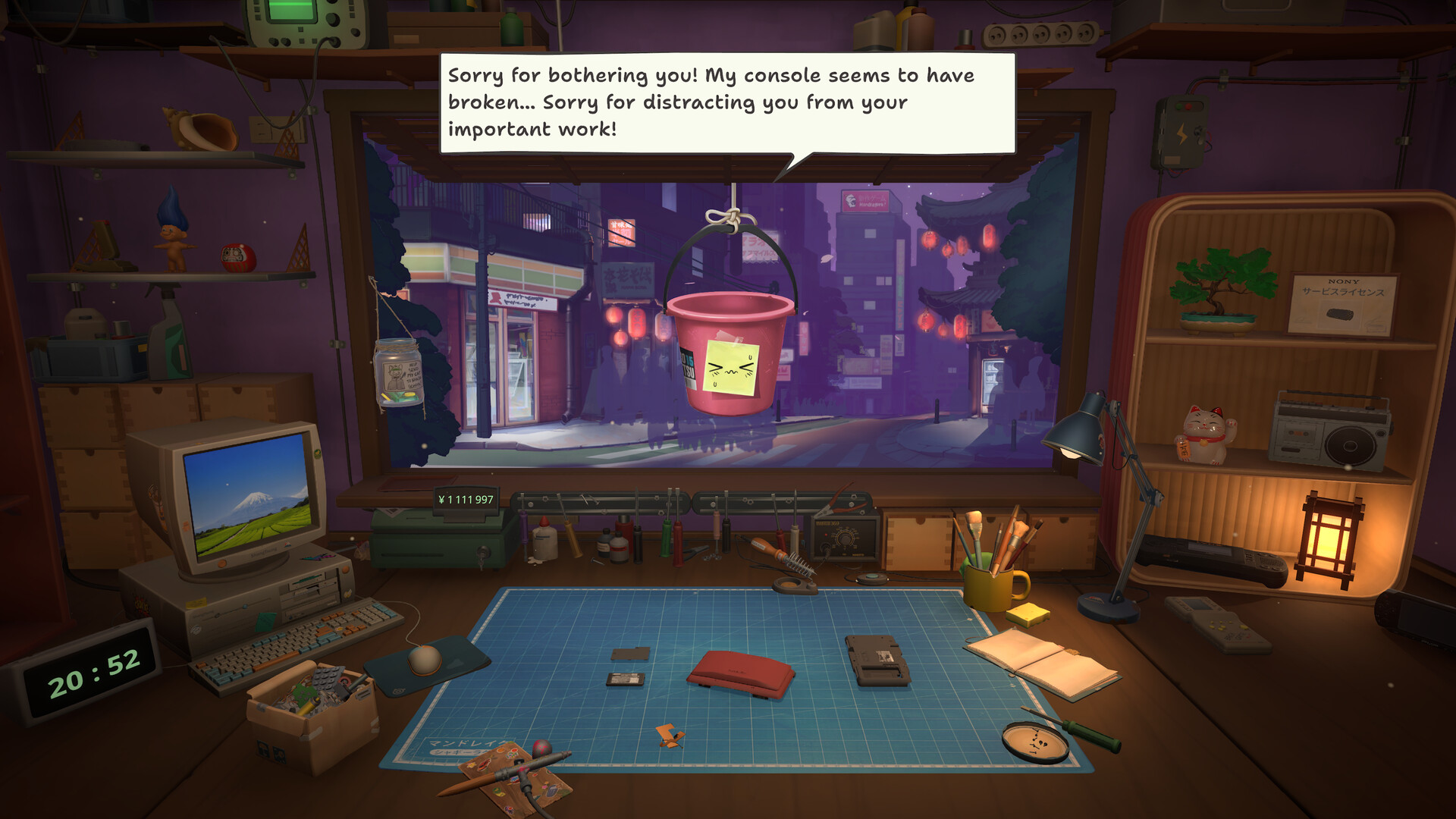
Story progress can depend on a completed repair, a To-Do, and the next conversation. Check all three before treating a quiet shop as a softlock.
Immediate and later results
The immediate result is a more personal exchange rather than a simple transaction. The important confirmation comes later: continue talking to Hashimoto and complete his follow-ups. The extended route eventually reveals a special drawer and information about the previous owner.
Customer follow-ups are not a main-ending formula
The free-repair conversation and drawer belong to the customer route described by the linked guide. They do not substitute for the later main-ending decision; use Endings for that separate branch.
Branch comparison
Keep the free-repair save and a separate full-price or no-history save if you want to observe both outcomes. Change only this conversation where practical; unrelated purchases, rent timing, and decoration can obscure what the choice actually changed.
A safe Hashimoto route from intake to hand-in
Treat Hashimoto's job as a sequence rather than one isolated dialogue choice. Read the request, inspect the device, and keep a manual save before returning it. If your goal is the favorable route, offer the repair without turning the conversation into a dispute over payment, then ask about the history attached to the device. Finish the hand-in conversation before moving to another branch save. The important evidence is not merely that one line sounded kind; it is that the later Hashimoto material becomes available on the same save. If it does not, record the exact last conversation you saw and reload the pre-hand-in checkpoint instead of replaying the whole game blindly. Keep this checkpoint until the later drawer and previous-owner material appears, because that observable callback is stronger proof than a remembered dialogue choice.
- Save before returning the device
- Keep the free-repair and history choices on one save
- Finish the full hand-in conversation
- Confirm the later callback before deleting the checkpoint
How to compare the alternative without losing progress
Use a second save made before the hand-in if you want to compare the paid, dismissive, or non-history answers. Name saves by customer and choice rather than by slot number. After selecting the alternative, record the immediate response and whether the later callback appears; then return to the positive save for an ending run. Do not mix observations from two saves into one claimed route. A screenshot of the choice screen proves which option was selected, while a later scene proves the branch continued. Keeping those pieces separate makes it possible to correct the guide when a patch changes wording or timing. If another guide names a fixed day, treat it as that player's observation until the same timing is reproduced on the current build.
| Checkpoint | What it proves | Keep until |
|---|---|---|
| Before hand-in | Both dialogue branches remain testable | Both outcomes are recorded |
| After positive answer | The intended choice was saved | The drawer callback appears |
| Before finale | Hashimoto progress is on the ending save | The ending is confirmed |
Why the route can appear not to work
First make sure the repair was handed in on the same save that contains the intended dialogue. Then check whether you advanced far enough for the follow-up rather than expecting it immediately. A copied save, cloud conflict, or loading an older autosave can silently return the branch to an earlier state. Do not assume shop money, decoration, repair score, or a particular day is the missing requirement unless a controlled test shows that link. If the callback remains absent, preserve the save, note the current build and active objective, and compare the sequence with the Choices and Endings hubs. A useful report names the last Hashimoto conversation, completed objective, slot timestamp, and the first point where the expected route differed. That is more actionable than saying only that the ending is broken.