A license is worth buying when it unlocks a job you can complete now. Protect the parts-and-bills buffer first, then prioritize the narrowest license that removes an actual progression gate. Read the next blocked order, identify the exact required license, and compare its cost with the cash left after parts and bills. Broad access is not progress if it leaves the accepted repair unfunded.
Best license order without wasting cash
Read the next blocked order, identify the exact required license, and compare its cost with the cash left after parts and bills. Broad access is not progress if it leaves the accepted repair unfunded.
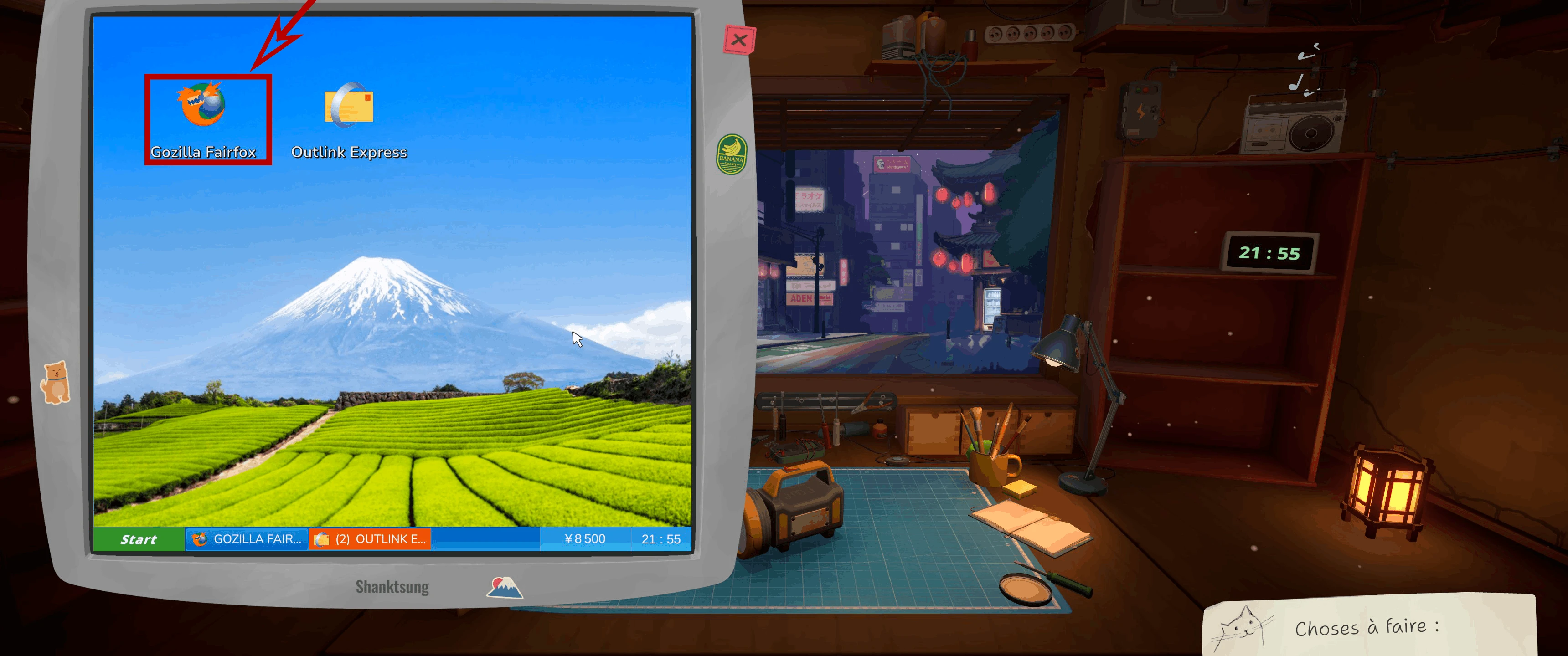
The shop computer has separate browser and email shortcuts: shopping and customer orders start in different apps.
What licenses actually change
A license expands the device work your shop can take and the stock it can use. That makes it a capability purchase, not an automatic profit multiplier. The useful question is not which badge looks most advanced, but which locked device family is already appearing in orders, marketplace plans, competition goals, or spare-parts needs.
Choose by observed demand
Keep a short blocked-work list for several in-game days. Record the device family, whether the block came from an order or marketplace listing, expected reward, required supporting tool, and parts you already own. Buy the license that converts more than one observed block into finishable work. A single tempting listing is weak evidence because its parts, condition, and eventual margin can still be poor.
License purchase decision
Use this table before confirming an unlock. It deliberately separates access from the total cost of completing the new work.
| Situation | Decision | Reason |
|---|---|---|
| Two or more current jobs use the family | Strong buy candidate | The capability has immediate demand |
| You own matching donors and required tools | Buy if bills stay protected | Existing stock lowers the first-job cost |
| The license also needs an unaffordable tool | Delay | Access alone does not finish the repair |
| One speculative marketplace device is the only reason | Wait for more evidence | The listing can erase the expected margin |
| Purchase consumes bill or active-order cash | Do not buy yet | Working capital has priority |
Robodog and other specific licenses
When one named license is blocking you, use the same test rather than assuming the newest unlock must be next. For the Robodog License, confirm that Robodog work is actually present, identify the supporting parts and tools, and preserve a post-purchase repair reserve. The dedicated Robodog License guide keeps that decision separate from the general progression plan.
Plan around achievement milestones
The public Steam list tracks obtaining any license, five licenses, the most expensive license, and all licenses. These are long-term completion goals, not a reason to empty the account during the first profitable stretch. Buy useful access naturally, then finish the expensive or remaining licenses from a stable completion save where bills, accepted orders, and required tools are already funded.
A practical purchase rule
Buy when a license removes a repeated, observed block and leaves a repair-and-bill buffer. Delay when the benefit is theoretical or creates a second tool block.
- List the jobs the license unlocks now
- Estimate supporting tools and donor costs
- Protect bill and accepted-order reserves
- Count matching parts already in storage
- Check competition and achievement value
- Reassess after several completed jobs
Research links
These are the primary pages used to check the facts and current release context in this guide.
Official information, observable release behavior, and community reports are deliberately separated. A community report is not presented as a universal fix until it can be reproduced or supported by current patch notes.