Profit is not only the payment at the end of a ticket. It is the gap between that payment and every unnecessary part, upgrade, and delay along the way. Separate three different causes before buying decorations or repeating repairs.
Repair Profit Calculator
Estimate the margin before buying a device or replacement parts. Values stay in this browser.
Planning rule: at least 20% estimated ROI = good flip; below 20% = marginal. This is not a game rule.
Observed or historical values are not guaranteed payouts. Check the current listing in your build and save.Why is the shop dirty, smelly, or stuck at three stars?
Separate three different causes before buying decorations or repeating repairs.
| Cause | How to recognize it | Next action |
|---|---|---|
| Actual shop state | Visible starter trash, boxes, newspaper, low Zen | Remove remaining clutter and add useful decoration |
| Story review campaign | Ratings suddenly fall after a threat or rival event despite a clean shop | Continue the active main-story order; the review state resolves through the story |
| 1.0.015 guitar blocker | Three stars occur at the rock-musician guitar hand-in and story stops | Update to 1.0.015, preserve the old slot and retry from a protected pre-hand-in copy |
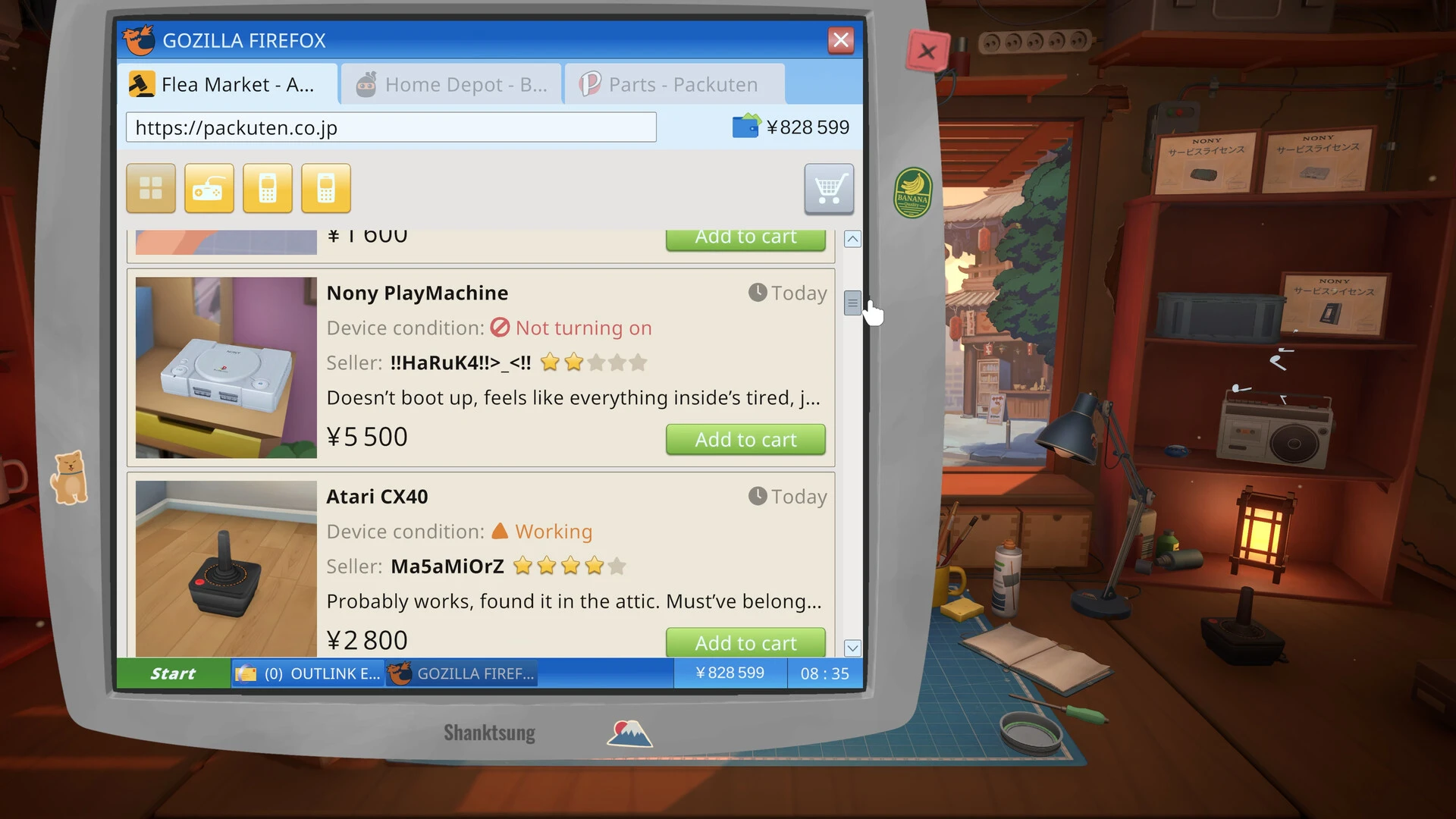
Marketplace decisions start with the listing: compare condition, price, seller information, license access, and the parts or resale purpose before buying.
Marketplace vs Online Orders
Use Online Orders for predictable contracted work and the Marketplace when you can inspect risk before committing cash. No fixed ROI is claimed because condition, parts, licenses, seller quality, and the 1.0.013r rebalance can change the result.
| Route | What is known up front | Main risk | Best use |
|---|---|---|---|
| Online Order | Requested work, deadline, listed reward | Obligation and parts cost | Stable planned income |
| Marketplace flip | Device, listing condition, asking price | Hidden faults and tied-up cash | Known models with a margin buffer |
| Marketplace donor | Model and visible condition | Needed part may be absent or unusable | Specific compatible parts and spares |
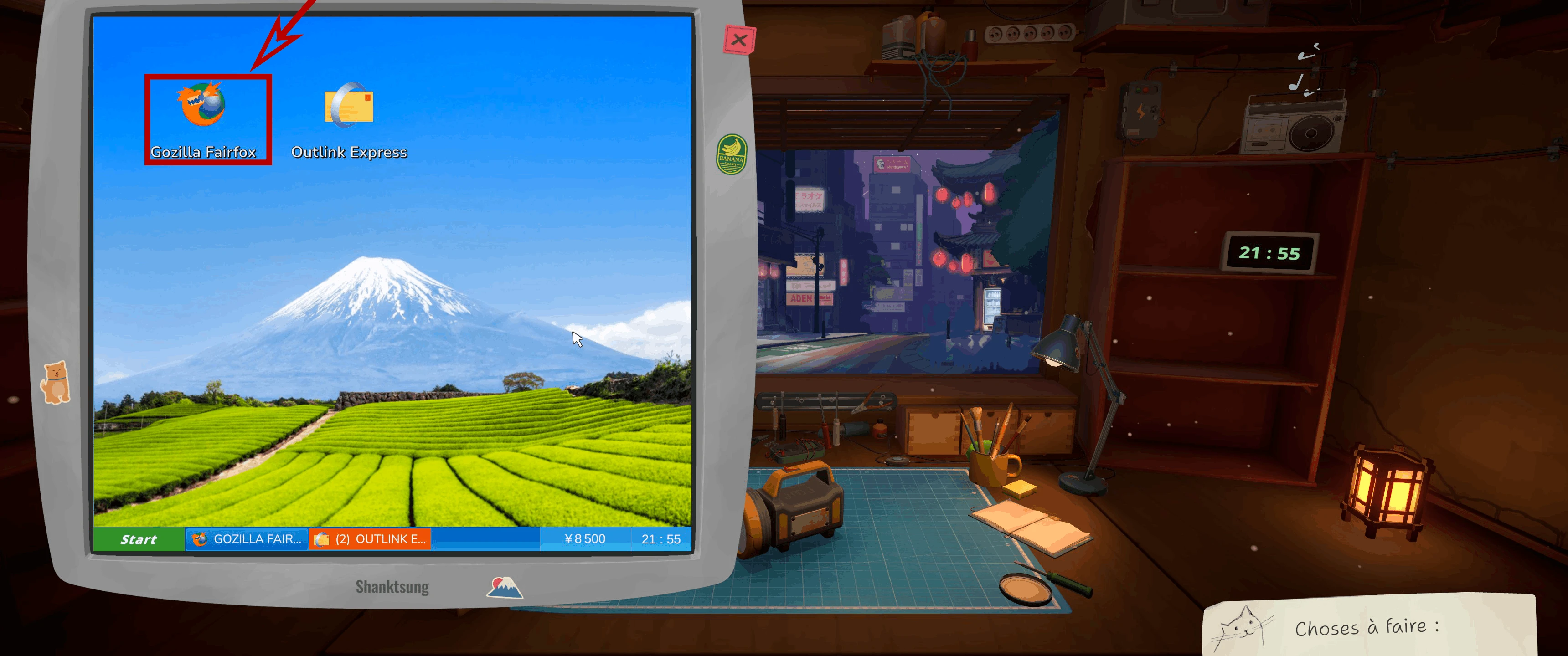
The shop computer has separate browser and email shortcuts: shopping and customer orders start in different apps.
Protect working capital
Keep enough money available for likely repair parts before buying quality-of-life upgrades. A shop that owns a new tool but cannot fund its next order has progressed sideways.
Diagnose before buying
The game's Y2K-style browser lets you hunt for spare parts. Use it after inspection gives you a reason to buy, not as the first step of every job.
Build a clean order rhythm
Finish accepted work efficiently, avoid speculative purchases, and check what each upgrade unlocks. The best investment is the one that removes a real bottleneck in the jobs you can currently take.
Understand the shop economy
Income comes from completing work and using the wider business systems; expenses include replacement parts, tools, licenses, marketplace stock, customization, and bills. The most important number is therefore not the reward shown on one ticket but the cash left after the job and the capability it unlocks. A repair with a high payment can still be inefficient if it requires speculative purchases that are not useful elsewhere.
Track three balances: money reserved for active repairs, money reserved for bills, and money available for growth. This simple separation prevents a decorative purchase or license from consuming the funds needed to finish a customer device.
Make online orders work for progression
Email work is not a side menu with no consequences. The public Steam achievement conditions include milestones for the first email order, 25 email orders, and 100 email orders. That makes online requests a reliable long-term track for both income and completion progress.
Check the request, device category, likely part requirement, and available cash before accepting more work than the bench can comfortably support. A steady queue is better than a crowded inventory of unfinished devices. Record whether an order arrived by email, in person, through the marketplace, or as a competition so that progress toward different goals remains visible.
Use the marketplace deliberately
The marketplace can supply devices for repair, parts, resale, or collection. Steam achievements confirm milestones for buying five and 25 marketplace devices and for selling five devices. Those targets reward participation, but they do not make every listing profitable. Inspect the purchase purpose before committing cash: are you acquiring a needed part, a device to restore, a license opportunity, or merely progress toward a milestone?
Avoid filling shelves with projects that cannot yet be completed. A cheap broken device can become expensive storage when it needs an unavailable license or tool. Start with purchases that fit capabilities the shop already owns.
Plan achievements without distorting the shop
Business achievements include earning more than 100,000 yen in a day and reaching 1,000,000 yen, while review milestones rise from five to 25 and 50 reviews. Treat those as long-term indicators rather than reasons to rush every order. Efficient repair habits, online work, and controlled marketplace activity naturally build toward them.
Bill-related achievements include paying bills and receiving an overdue warning. If you are pursuing completion, isolate risky experiments in a separate save. Deliberately damaging the shop economy on the main route can create more cleanup than the achievement is worth.
A simple ledger for a healthy repair shop
Judge each purchase against four envelopes: active jobs, upcoming bills, capability growth, and optional progression. Active-job money pays for the parts already supported by diagnosis. Bill money remains untouched so a profitable-looking upgrade does not create an avoidable warning. Capability money buys the tool or license that removes a repeated block. Optional money covers decoration, comfort, speculative marketplace devices, parts boxes, stickers, and completion experiments. Recalculate those envelopes after every finished order rather than relying on the large balance at the top of the screen. For an email or counter job, record the reward, replacement cost, any new capability required, and whether the purchase will help later devices. For a marketplace item, state the purpose before buying: repair and sell, obtain stock, expand a collection, practice assembly, or advance a milestone. If the purpose is unclear, wait. Use reviews, email-order counts, marketplace counts, and daily earnings as trend signals, not as permission to accept an unmanageable queue. A full shelf of unfinished devices locks up cash and attention. When considering a screwdriver, ultrasonic bath, shredder, soldering capability, reprogramming option, or license, note how many recent jobs were delayed without it. Broad, frequent bottlenecks deserve earlier investment than rare conveniences. Keep risky achievements, such as an overdue warning or a large parts-box gamble, on a separate save. The objective is not maximum spending avoidance; it is preserving enough flexibility to accept good work while the shop steadily becomes more capable.
- Reserve the cost of parts for every accepted repair
- Protect bill money before upgrades or decoration
- Buy capabilities that solve repeated, observed blocks
- Give every marketplace purchase a written purpose
- Avoid carrying more unfinished work than the bench and cash can support
- Track profit after parts rather than the headline reward
- Use email jobs as a steady progression track
- Pursue risky or expensive achievements from a protected save
Cross-check this step with Marketplace, then use Licenses to choose the next action without changing several variables at once.
Research links
These are the primary pages used to check the facts and current release context in this guide.
Official information, observable release behavior, and community reports are deliberately separated. A community report is not presented as a universal fix until it can be reproduced or supported by current patch notes.