ReStory is a repair-themed game, not a substitute for a real device service manual or supervised repair training. It can make the broad repair workflow easier to picture, but that does not prove a fictional device matches the hardware on your desk.
Where ReStory resembles repair
The official store describes a loop of disassembling electronics, cleaning components, replacing faulty parts and reassembling the device. Those stages resemble the shape of repair work, while the game compresses diagnosis, tool choice, risk and model-specific detail into a playable task.
| In-game activity | Useful idea | What it does not prove |
|---|---|---|
| Reading the order and inspecting a device | Start with the symptom and available evidence | The game reproduces every real fault or diagnostic measurement |
| Removing layers and screws | Work in an organised sequence | A fictional screw map matches a real model |
| Cleaning and replacing parts | Cleaning and replacement are different actions | The same material, solvent or component is safe for physical hardware |
| Reassembling and checking the job | Verification is a separate step | A completed game order proves a real device is electrically safe |
| Managing orders and the shop | Repair work also needs organisation | Game prices, timing or customer outcomes are business benchmarks |
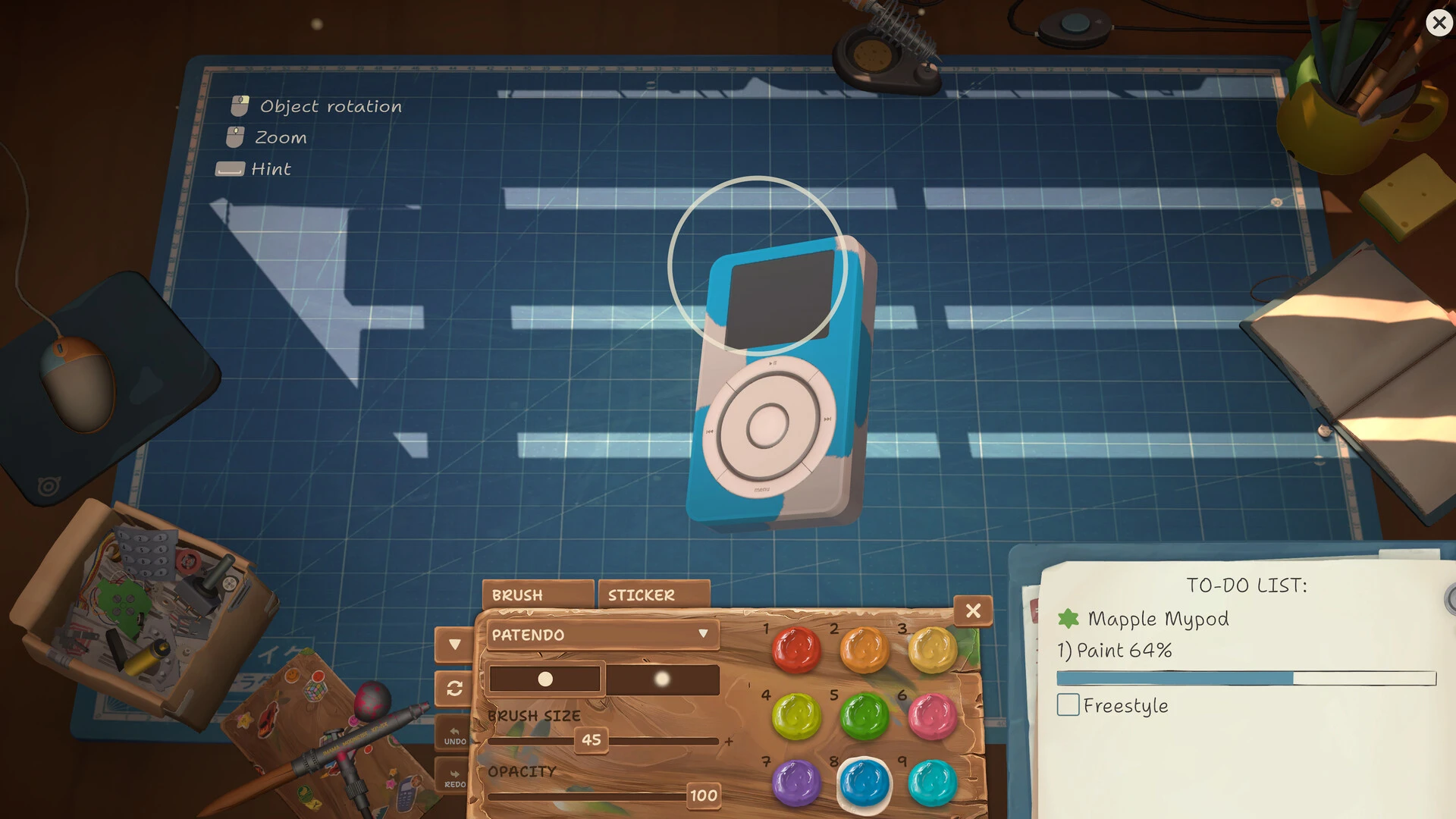
Official gameplay shows a simplified paint task, job counter and fictional device at the repair bench. It demonstrates the game interface, not a safe procedure for physical electronics.
How accurate are the devices?
There is a limited published comparison, and its boundary matters. In an August 6 review, SmashPad said its reviewer compared a handful of in-game devices with teardown material and found broad similarities plus simplifications such as fewer wires or screws and omitted hidden-fastener details. That is one reviewer’s observation about a small sample, not proof that every device is mechanically exact. Licensed Atari branding likewise does not turn the game into a complete service manual.
Can you learn electronics repair from ReStory?
You may become more familiar with repair vocabulary and the idea of a repeatable inspect–disassemble–clean–replace–reassemble workflow. A recent Steam question asks whether the game has enough depth to help someone learn console repair; that establishes a real buying question, not evidence that the game trains console technicians. For physical equipment, use documentation and training for the exact model and your experience level. Never copy a simulated cleaning, soldering or power-related action onto real electronics merely because it worked in the game.
What to look for in gameplay before buying
Watch whether you enjoy the actual loop: reading a task, handling components, checking the game’s feedback and returning to the customer or shop. Notice how much guidance the interface provides and how often diagnosis is simplified. The official trailer below shows the published tone, interface and repair-shop loop; it is not evidence of real-device training or a model-by-model accuracy test. An uncut current-build repair is more useful for judging how one task flows.
- Look for the amount of guidance during disassembly and reassembly
- Separate visual detail from diagnostic depth
- Check whether story and shop management are part of the experience you want
- Treat “100% realistic” claims without a documented comparison as unsupported
Choose the next guide for your goal
Open Repair Guide for the in-game bench loop, Devices for model-specific game records, Platforms for supported hardware, or Demo Status before deciding how to try the game. Those pages answer different questions and do not convert gameplay into real-world repair instruction.
Research links
These are the primary pages used to check the facts and current release context in this guide.
Official information, observable release behavior, and community reports are deliberately separated. A community report is not presented as a universal fix until it can be reproduced or supported by current patch notes.