The developers estimate 15+ hours for the main story, with total time varying by playstyle. Branching choices, optional orders, repair pace, competitions, and achievement cleanup can extend a save well beyond that baseline. The pre-release FAQ says players can spend 15+ hours on the main story and continue as long as they like. It also names branching storylines, device customization, and online orders as replayability factors. Treat 15+ as an official estimate, not a speedrun promise or completionist average.
15+ hours official; public runs vary
Player sample N=3. Reported playtime is context, not a promise.
- ●8.6 hPublic Steam record
- ◆9.5 hSample median / first-ending report
- ●18.8 hPublic Steam record
- ◎15+ hOfficial main-story estimate
Official answer: 15+ hours for the main story
The pre-release FAQ says players can spend 15+ hours on the main story and continue as long as they like. It also names branching storylines, device customization, and online orders as replayability factors. Treat 15+ as an official estimate, not a speedrun promise or completionist average.
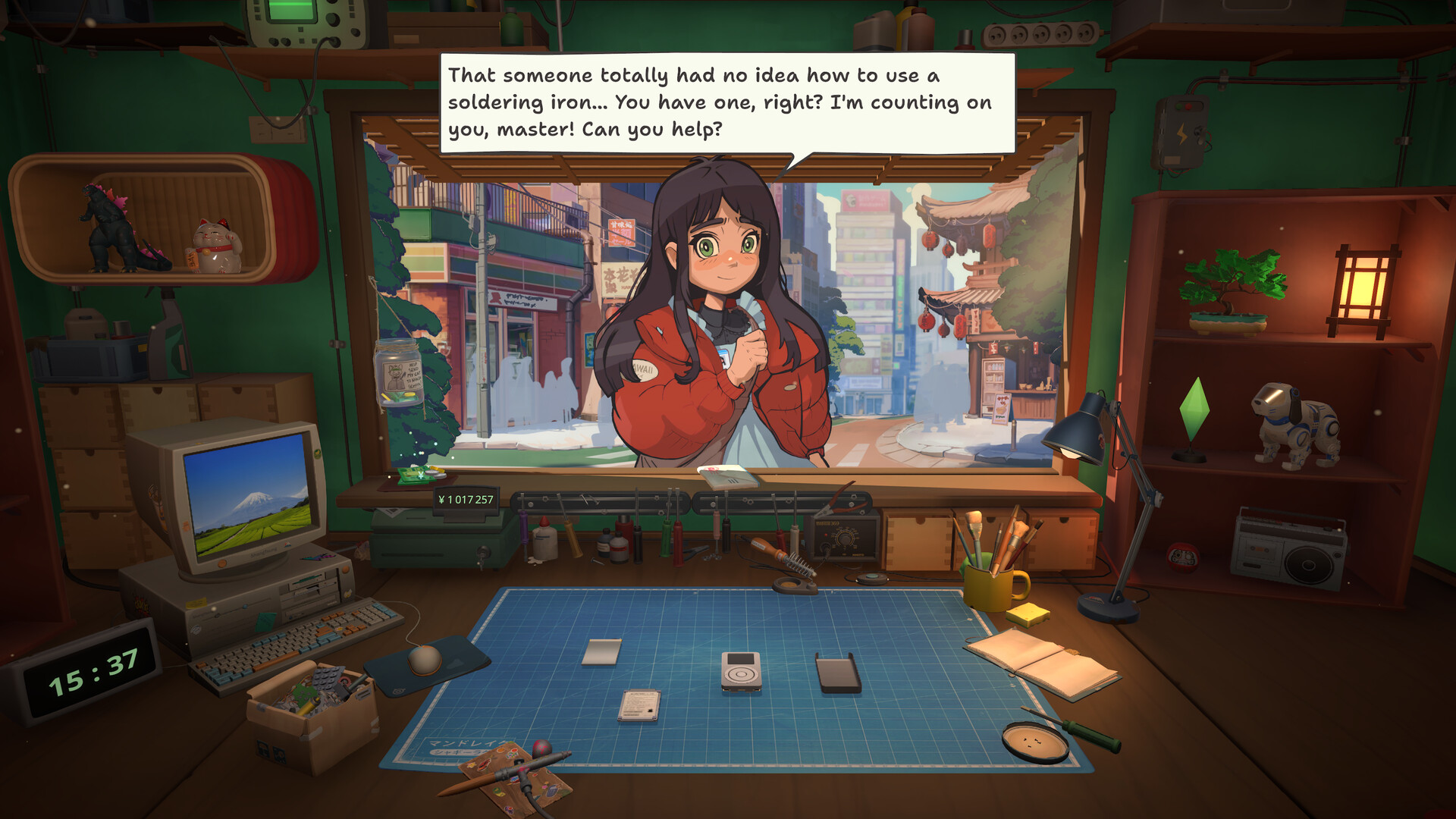
Orders begin at the counter. Read the request, then check the To-Do list before deciding that progress is blocked.
Official estimate and three public playtimes
The official pre-launch estimate is 15+ hours for the main story. A small, auditable sample of three public first-ending/playtime records spans 8.6 to 18.8 hours, with a median of 9.5 hours. Treat that as reported evidence, not a population average: Steam time can include optional jobs or time left running, and one published first-ending account rounded its run to roughly 9.5 hours.
| Measure | Time | Sample / evidence |
|---|---|---|
| Main story | 15+ hours | Official estimate; N/A |
| Player first-ending/playtime sample | 8.6–18.8 hours | Community reports; N=3; median 9.5 |
| 100% achievements | No reliable range yet | No auditable sample published |
What changes your total time
Careful teardown and reassembly take longer than familiar repeat repairs. Reading every dialogue branch, accepting extra email work, practicing competitions, rebuilding shop cash, and protecting multiple choice saves all add time. Reusing a verified checkpoint is faster than replaying a whole route after an exclusive invitation.
Story versus 100 percent
Finishing the narrative is not the same as unlocking all 50 achievements. Day-based goals, route-exclusive achievements, every-device competition wins, licenses, and shop milestones belong to a longer completion plan. Keep the first playthrough spoiler-light, then use named saves for focused cleanup.
A low-stress route
Learn the repair loop, keep two rotating saves, finish visible story tasks before taking a large optional queue, and preserve checkpoints before major hand-ins. After the credits, compare missing achievements and routes instead of starting over blindly.
Turn the official estimate into a personal plan
Use the official 15-plus-hour description as a scope signal, not a countdown. The observed player sample on this page shows that real first runs can be shorter or longer, and the sample is too small to claim a universal average. Estimate your pace by timing two ordinary sessions and separating active play from menus, breaks, and guide reading. Then decide whether you are following the main story, exploring customer dialogue, optimizing the shop, or pursuing achievements. A player who reads every conversation and protects branch saves is doing more than a direct story run even when both eventually see the same credits. State whether your target is credits, all customer arcs, all endings, or completion before comparing your time with another report.
Main story, story plus, endings, and completion
A main-story estimate ends at the story finale. A story-plus run follows optional customer material and explores shop systems. An all-endings run preserves and revisits major branch checkpoints. A completion run adds every achievement, license, competition win, purchase target, and long-term day milestone. These categories are not the same task. If your target changes midway, keep the credits time and record cleanup separately. Repair familiarity, dialogue reading speed, retries, accessibility needs, language, guide use, and unattended menu time all affect the clock. Platform playtime may count time left in menus or while writing notes, so one precise number can be less informative than a range with scope and context.
| Scope | Finish line | Main time drivers |
|---|---|---|
| Main story | Reach the story finale | Reading pace and repair familiarity |
| Story plus | Major customer arcs and exploration | Branch saves and shop activity |
| All endings | Confirm each finale | Checkpoint quality and replay |
| Completion | Achievements and long-term goals | Competitions, money and day milestones |
A practical session plan and save strategy
Divide a relaxed first run into workshop learning, stable shop operation, customer-route decisions, and finale preparation. First learn one repeatable repair routine. In the middle, protect cash for accepted jobs and follow actual objectives rather than grinding without a target. Before decisive hand-ins, make named saves. Near the finale, audit the callbacks required for the ending you want. This plan does not invent chapter lengths; it gives each session a clear stopping point. Close after a completed repair or before a major dialogue so the next start has an obvious context. Keep a blind-run archive, a positive-route save, and customer-specific checkpoints if you plan to compare endings without replaying every early repair.
- Learn one repeatable repair routine
- Keep cash for accepted jobs
- Name saves before major hand-ins
- Check callbacks before the finale
- Record credits time separately from cleanup
Estimating achievements and improving the sample
Completion time depends on progress already made during the story. Competition experience, money saved, licenses purchased, and route checkpoints can reduce cleanup; missed branches and long-term day goals can extend it. Review the 50-achievement checklist and group remaining tasks into story, workshop, purchases, competitions, and elapsed-day milestones. Do not multiply an early unlock rate by 50 because requirements are not uniform. A useful time submission includes platform, build, credits or completion target, ending, prior experience, guide use, and whether unattended menu time is included. Median and range are more honest than a precise average when the sample is small. Official marketing language remains labelled official, while observed playtimes remain a player sample that can change as more complete reports arrive.
Choosing another game after ReStory
Ready for a different workbench or a quieter story? Games like ReStory compares seven released games by repair work, customer stories, shopkeeping and cleaning, including retro cartridge restoration.