Patch 1.0.013r officially rebalanced the marketplace without publishing exact price, stock, rating, or condition changes. Buy for a defined purpose, record current-build observations, and treat older margins as history. Fully repair and clean the device, then place it at the same hand-off point used to return customer devices. The courier collects the finished item and pays you. If the game will not accept it, recheck every repair and cleaning objective before trying the hand-off again.
How to Sell Items in ReStory
Fully repair and clean the device, then place it at the same hand-off point used to return customer devices. The courier collects the finished item and pays you. If the game will not accept it, recheck every repair and cleaning objective before trying the hand-off again.
- Finish every required repair
- Clean the device completely
- Place it at the customer hand-off point
- Wait for the courier to collect it and pay you
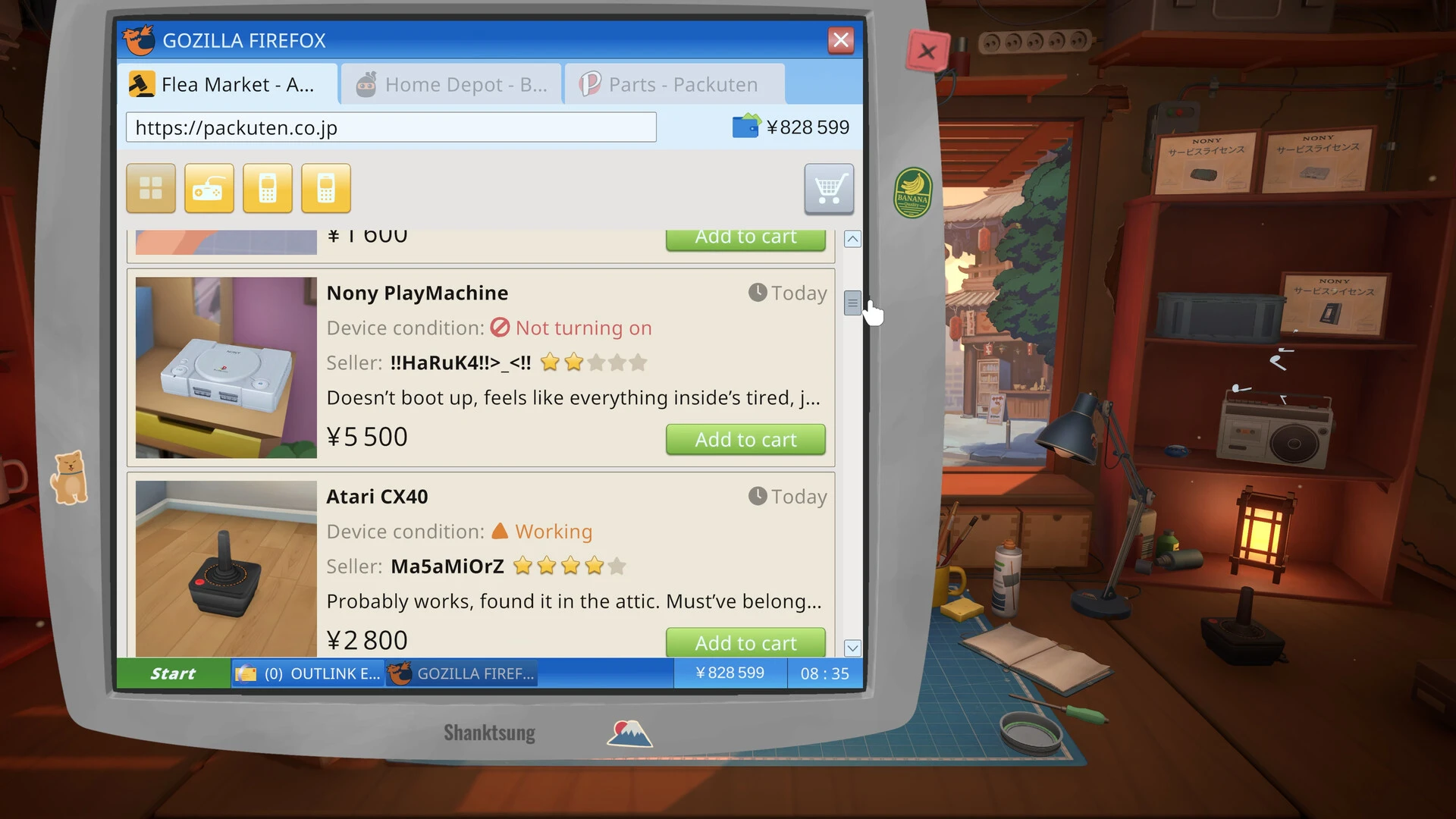
Marketplace decisions start with the listing: compare condition, price, seller information, license access, and the parts or resale purpose before buying.
Marketplace vs Online Orders
Use Online Orders for predictable contracted work and the Marketplace when you can inspect risk before committing cash. No fixed ROI is claimed because condition, parts, licenses, seller quality, and the 1.0.013r rebalance can change the result.
| Route | What is known up front | Main risk | Best use |
|---|---|---|---|
| Online Order | Requested work, deadline, listed reward | Obligation and parts cost | Stable planned income |
| Marketplace flip | Device, listing condition, asking price | Hidden faults and tied-up cash | Known models with a margin buffer |
| Marketplace donor | Model and visible condition | Needed part may be absent or unusable | Specific compatible parts and spares |
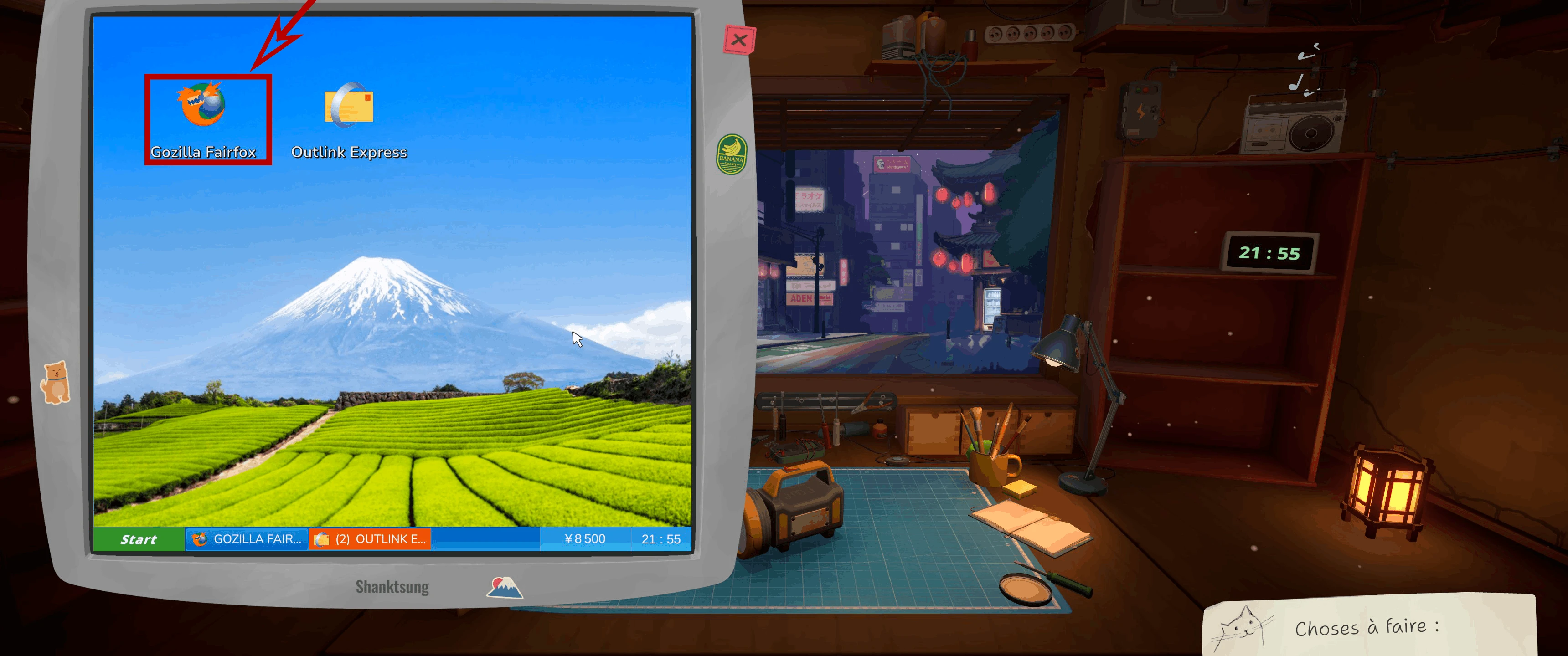
The shop computer has separate browser and email shortcuts: shopping and customer orders start in different apps.
What changed with the marketplace in 1.0.013r?
The developers confirmed a marketplace rebalance in patch 1.0.013r, but the official notes do not specify exact price, stock, seller-rating, or condition changes. Record observations instead of guessing the formula.
Choose a purpose before buying
Label every purchase as a donor, repair-and-sell flip, collection item, competition practice device, or milestone purchase. If the device has no clear purpose, leave it listed. This single rule prevents shelves of unfinished electronics from consuming cash and attention.
Evaluate donor value
For a customer repair, match the same model and technical version and identify the exact component needed before shopping. A cheap broken listing can be the best donor when that component remains usable. Add the expected value of leftover working parts without counting the same value twice.
Calculate a real flip margin
Start with expected sale price, then subtract purchase price, replacement or donor cost, tool or license requirements, and a condition-risk buffer. A positive advertised spread is not profit until the device arrives, opens, cleans, rebuilds, and sells.
Seller ratings are not guarantees
Current player reports describe heavily damaged devices from highly rated sellers. Use ratings as one signal, not insurance. Protect bill money, avoid concentrating the shop's cash in one listing, and keep room for an unexpected part.
Marketplace checklist
Review these fields before confirming a purchase.
- Purpose of the device
- Exact model and technical version
- Listed condition and seller signal
- Known needed component
- Purchase plus repair cost
- Expected resale or saved-parts value
- Risk buffer and protected bill money
- Inventory space and time to finish
Research links
These are the primary pages used to check the facts and current release context in this guide.
Official information, observable release behavior, and community reports are deliberately separated. A community report is not presented as a universal fix until it can be reproduced or supported by current patch notes.